Collaborations and Releases with White’s, Freenote Cloth, and The Fields
This week, we have a layered release of meaning, partnership, and exceptional goods. A pair of new collaborations with White’s features the only production-level of hand-sewn welted stitchdown construction in the world, giving a fresh perspective to their iconic Semi-Dress Boot. For the fall launch and our upcoming FW25 Residency, Freenote Cloth gives us a sharp selection of flannels and denim, showcasing their signature duty-driven heritage style. Additionally, we introduce The Fields Honey 2025 Vintage, sourced directly from our on-site apiary, which is one of only a few naturally foraged, organic, native wildflower-fed honeys in the state. Get some raw selvedge denim, wickedly rugged White’s boots, wild raw honey, and book your Made-to-Order appointments for our Fall-Winter Residency for once-in-a-lifetime goods and experiences that, without your support, will cease to exist.


Let’s be honest, this year has been challenging, and things are not looking up. However, amid the upheaval, we aim to think differently and work diligently to create innovative and exceptional products and experiences. From our collaborations and developments in apparel and footwear, to products derived from The Fields, or our biggest and best yet Fall-Winter Residency coming up, we are forging ahead on the Division Road to continue the journey by constantly leveling up.


We are on the road less traveled by a large margin, and our reach is niche. However, we believe what matters are our actions in our circles of influence, and small does not mean meek. In that spirit, and speaking to the choir, we ask that you look to support businesses with a soul and acquire goods with purpose. Let’s shine a light on what is good and valuable to preserve and build upon as things become bleak. We believe that quality from product to experience is worth the extra effort.

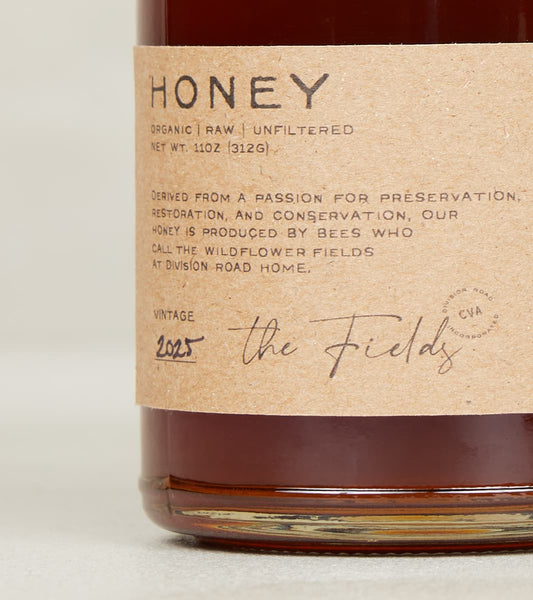
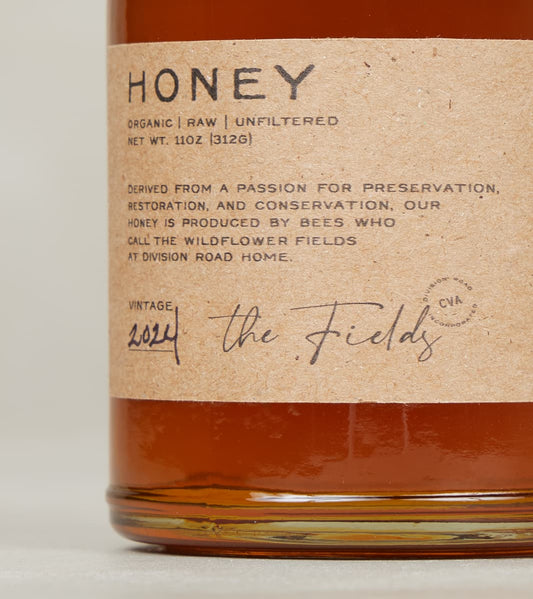
The Fields Honey
This year, we have a story to tell — one that is unfiltered and aligned with our raw, organic, and authentic natural honey. While increased attention to bee populations has led to some stabilization over recent years, a widespread collapse occurred nationwide in 2024-2025. This year's losses of commercial honeybee colonies are estimated at 60-70%, marking a concerning rise compared to previous years. Several causes have been identified and speculated upon to explain this decline. Climate change, non-native plantings, pesticides, and invasive pests are all reasonable and accurate explanations for the observed changes.


These issues stem from industrialization and the drive for profit at the expense of the natural world’s health and future, along with all its inhabitants. From our experience on the land and working with the most conscientious and considered wildlife, habitat, and environmental restorers we can find, another cause of this collapse is quite apparent. It’s the commercialization of honeybees and honey production itself. We’ve found that it’s common practice to harvest all the honey from the hives and provide “feed” for the bees year-round. Sugar-water syrup and “pollen patties” are used by most commercial and many small apiaries. The usual method is to take all the bees’ natural food and supplement it with this artificial substitute.


The honey and pollen collected by a colony are tailored to the specific needs of that honeybee community, providing natural nutrients essential for the bees' health. Leaving enough honey in the hives for the bees to feed on throughout the year is uncommon and considered exceptional. This atypical practice is called “natural foraged” compared to most honey produced from a hive that is regularly given supplemental feed. Another conservation effort involves creating an environment that allows all pollinators to thrive. Honeybees are just one of dozens of pollinators. Native pollinators, including wasps, hornets, and beetles, pollinate early and late in the season, supporting honeybees, bumblebees, and butterflies to forage mid-season. We now have 10 acres of native wildflowers, and we continue to reforest and plant native species throughout the property, allowing all pollinators to perform their seasonal dances. At the same time, they naturally expand these plantings through their pollination.


We have learned that nature is the best planter, and if you don’t spray or destroy, nature can do its own work when given conditions close to natural. Considering our natural food and foraging resources, we could easily expand our apiary. However, this creates unnatural competition instead of a community of diverse pollinators that maintains equilibrium. More honeybees push out other pollinators; as a result, their natural food sources diminish. While we’re not experts, it seems evident that the health of our land influences the balance of the local ecosystem, and if that is the priority, it takes care of itself — though the “commercial” honey yield tends to be lower. This proves once again that quality is and should be in balance with scale.
An uncharacteristically cool, shockingly long, and wet spring produced beautiful flowers, but pollen was washed away, and honeybees sheltered. As a result, even into May and June, we worried we might not have a harvest. However, temperatures rose in June, and the bees became busy, making up for lost time. Our bees are healthy and have plenty of honey to sustain them through winter. Given the nationwide collapses, we are fortunate with our bees and the practices of our beekeepers. Due to the season’s late start, the taste profile is equally impressive but quite different from that of 2024. Since flowers served as a secondary source, the honey has an earthy, woodsy, and even spicy layering in the top notes, dominated by sources such as Tulip Poplar, Blackberry, Black Locust, and Maple. The floral notes are present, with secondary notes from golden and blue asters, herbs, and milkweeds from our extensive native pollinator habitat. It’s a beautiful bouquet, and we recommend grabbing The Fields Honey 2024 Vintage alongside the 2025 Vintage to experience the raw, unfiltered goodness and see how it changes annually based on environmental influences.

White's x Division Road
As we constantly promote what White’s does, let's make it simple: They are the only production-level hand-sewn welting manufacturer in the United States. Combined with an all-leather build that has remained unchanged for the better part of a century, they produce footwear that stands up and lasts for decades in the most extreme conditions of logging and wildfire fighting. This hand-sewn welt tradition is tremendously uneconomical and slow, with each pair in one bootmaker’s hands from upper to bottoming, hand-lasting, nailing, and welting all by hand with a combination of force, grace, and expertise. Division Road only carries this specific construction type from White’s to showcase their rare craft, complemented by our numerous design tweaks and exclusive specifications.


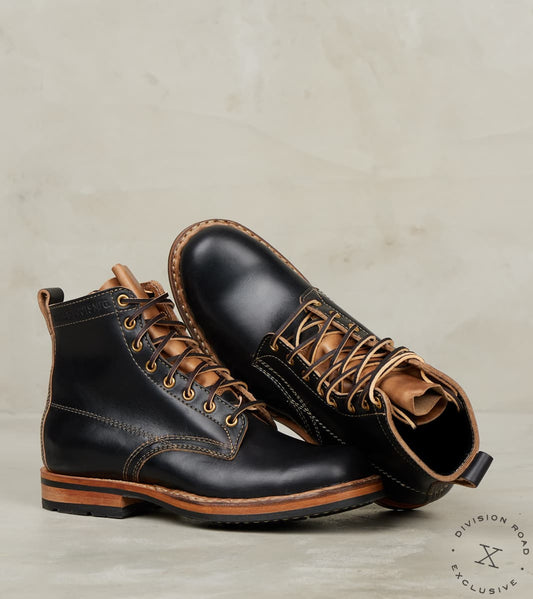
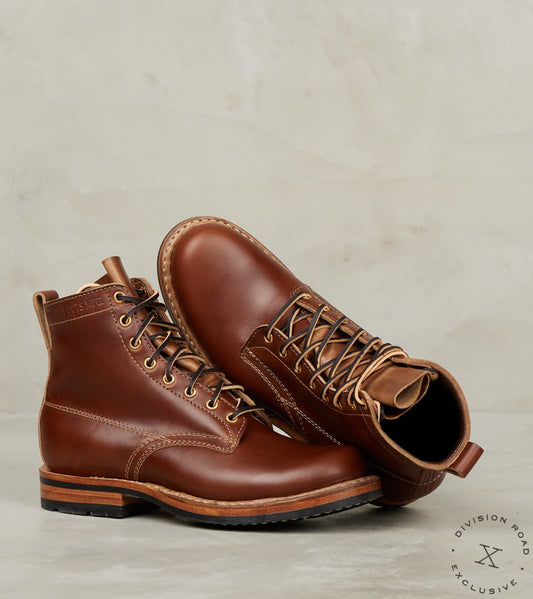
The new Chromexcel Semi-Dress 350 is a fresh, iconic example of our formula with White’s. Coming in a Division Road exclusive pattern, we’ve taken the standard 5” Semi-Dress, made famous on factory floors and for town excursions in the 1930s, and adapted it to an outdoor-appropriate 6” pattern height with corresponding specifications. For this new Semi-Dress 350 collaboration, we used contrasting heavy-duty natural upper thread to draw attention to the unique pattern stitching and integrated counter pocket. This is coordinated with the fully gusseted Natural CXL tongue and hand-welt, as well as the natural-finished leather midsole. Using the hallmark White’s 55 Last for a functional and gripped work boot fit and shape, supported by the arch-ease leather shank atop the Vibram 430 Mini Lug Sole — which is balanced in proportion with a lower profile tread and high traction — this boot is made for both utility and style.


This makeup comes in the rare, rust-brown British Tan CXL and the classic, warm Black CXL from Horween — full-weight hides renowned for their exceptional quality. With a single strike dyed grain and natural undyed core (tea-core), this hallmark tannage has a perfect balance of flexibility, comfort, patina, and durability. Combined with the warm detailing of the thread, the Natural CXL tongue and single row hand welt are layered on a natural leather-stained midsole, along with brass eyelets. These Chromexcel Semi-Dress 350s will provide a lifetime of workman class in high style.

Freenote Cloth
One of our major Fall-Winter Residency participants, who will be offering one-off creations in October at The Fields, is busy dropping some goods — perfect to break in now, rock for the event, and wear afterward. We are pleased to introduce the Wells shirt in Japanese Flannels, custom-developed for Freenote. The Evergreen and Bark Plaid Flannels come in a reliable medium-weight 7 oz. Twill, using dyed yarns to create striking and versatile palettes in a classic pattern. The Golden Pheasant Check Wells is an 8 oz. yarn-dyed flannel that uses thick yarns for a deconstructed, large-scale check pattern with a unique, yet equally wearable palette. This shirt pattern combines overshirt elements such as shoulder pleats and substantial patch pockets with a curved shovel flap, and custom Italian corozo fisheye buttons provide evolved heritage provenance.


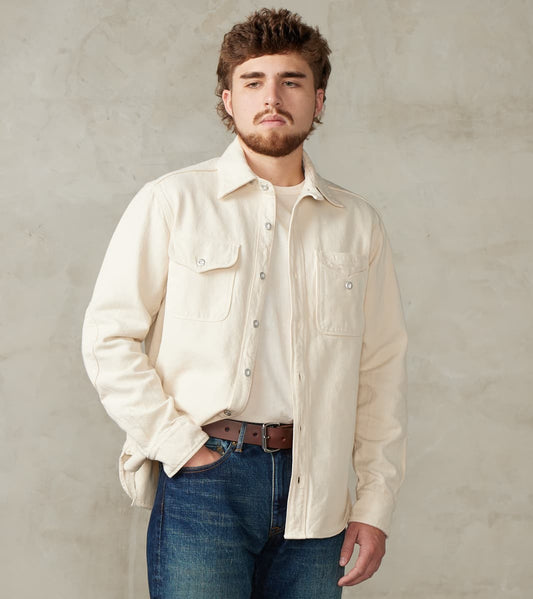
Then we have the Lambert Shirt in a new undyed Natural Canvas woven in the US as a broadcloth oxford box-weave at a hefty 10 oz. weight and stonewashed for a soft hand and pronounced texture. This exceptional workshirt features the unique detailing of a buttoned throat latch, tear-drop elbow patches integrated into the pleated button cuff placket, and a double patch pocket for dual functionality, offset by a flap patch chest pocket. All of this combines with the heavy-duty construction standards Freenote is known for, resulting in some of the most distinctive staple shirting in the business.

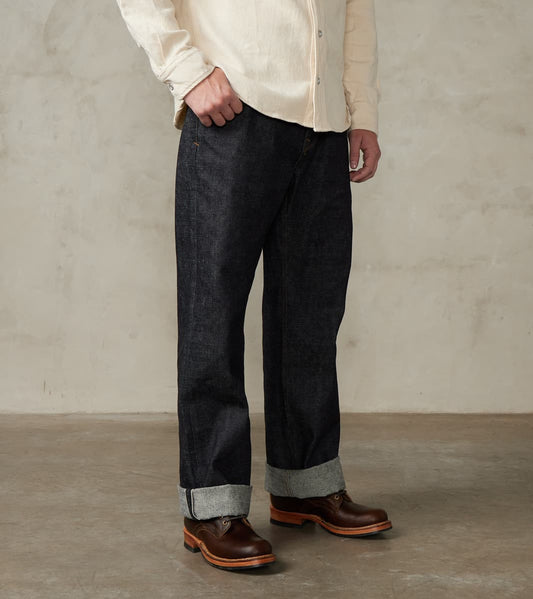
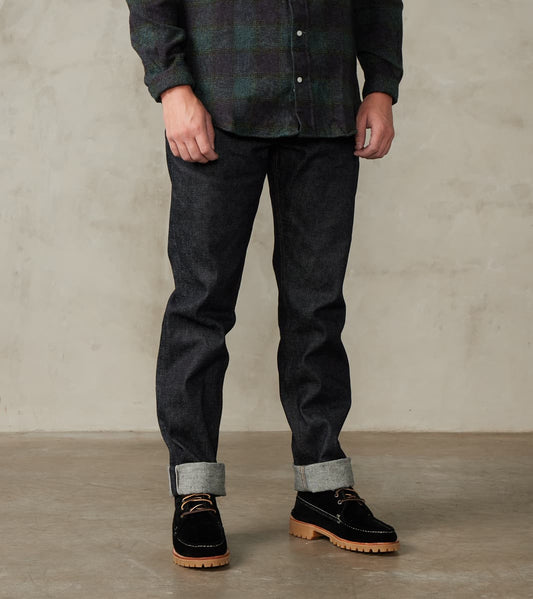
Completing the ensemble, we have Freenote’s new custom-developed 16 oz. Indigo selvedge denim from Japan’s Kaihara Mills. This medium-tension, slightly slubbed yarn denim will break in with an excellent combination of structure and drape, while fading with a balance of contrast and vintage pebbling. Coming in their popular Portola classic relaxed tapered fit and the newer vintage-inspired straight Modesto, this denim is sure to become your latest project and go-to jean for either modern or antique styling references. On a final note, the Portola Black x Black 17 oz. Slub is restocked with the promise of fade and comfort in one of the best fits in the market for all, and don’t miss it this time, as everyone needs a black shadow denim in their rotation.