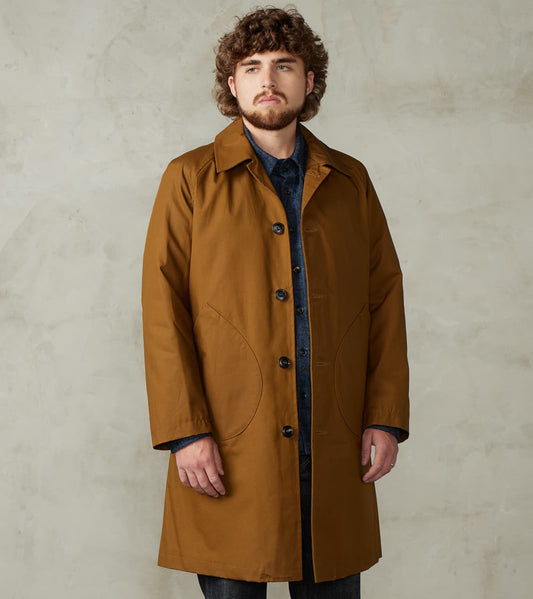
Releases from East Harbour Surplus
This week, we bring you a focused story on East Harbour Surplus, featuring a curated collection of Spring-Summer 2026 that highlights their inventive reinterpretations of menswear classics. Founded in Florence in 2008, East Harbour Surplus has established its identity by reimagining military and workwear archetypes into garments suitable for the modern wardrobe. Under the direction of Fabrizio Vanni, the brand refines utilitarian uniforms, field silhouettes, and tailoring classics into pieces that balance structure with ease — never costume, always considered.


This season’s offering draws inspiration from field jackets, officer and workwear chinos, safari and work shirts, relaxed tailoring, and some of the most balanced outerwear in menswear — each inspired by original uniforms but cut for today’s silhouette. Crisp cotton twills, yarn-dyed linens, and specialized canvas provide movement while maintaining the structural integrity and utility that define military-inspired design. The palette remains understated and versatile, allowing layers to build naturally from city streets to backwoods terrain. From the Groove Trench, Chester Field Blazer, Creek Work Jacket, to the pleated Enfield, flat-front Axel, and new Swiss Army Logan trousers, every piece reflects an Italian sensibility: precise yet unfussy, refined and practical.


With this seasonal release, East Harbour Surplus demonstrates how each piece serves as the foundation of a modern uniform, beginning with an archival study and concluding in Italian workshops where fabric selection, proportion, and finish are treated as essential components rather than afterthoughts. The result is a collection rooted in discipline yet expressive in execution, where classic menswear is transformed into versatile staples meant to be worn daily, not displayed nostalgically. For Spring-Summer, EHS continues this evolution with garments that feel lived-in from the first wear and endure long after the season changes.